Plan your packaging line around the product, output, space and growth you need
Industry packaging lines

Chemical & Household Product Packaging Lines

Chemical and household-product projects require early decisions on material compatibility, containment, ventilation, electrical classification and safe cleaning before machinery is selected.

Application-led designRepresentative product trialsUK support
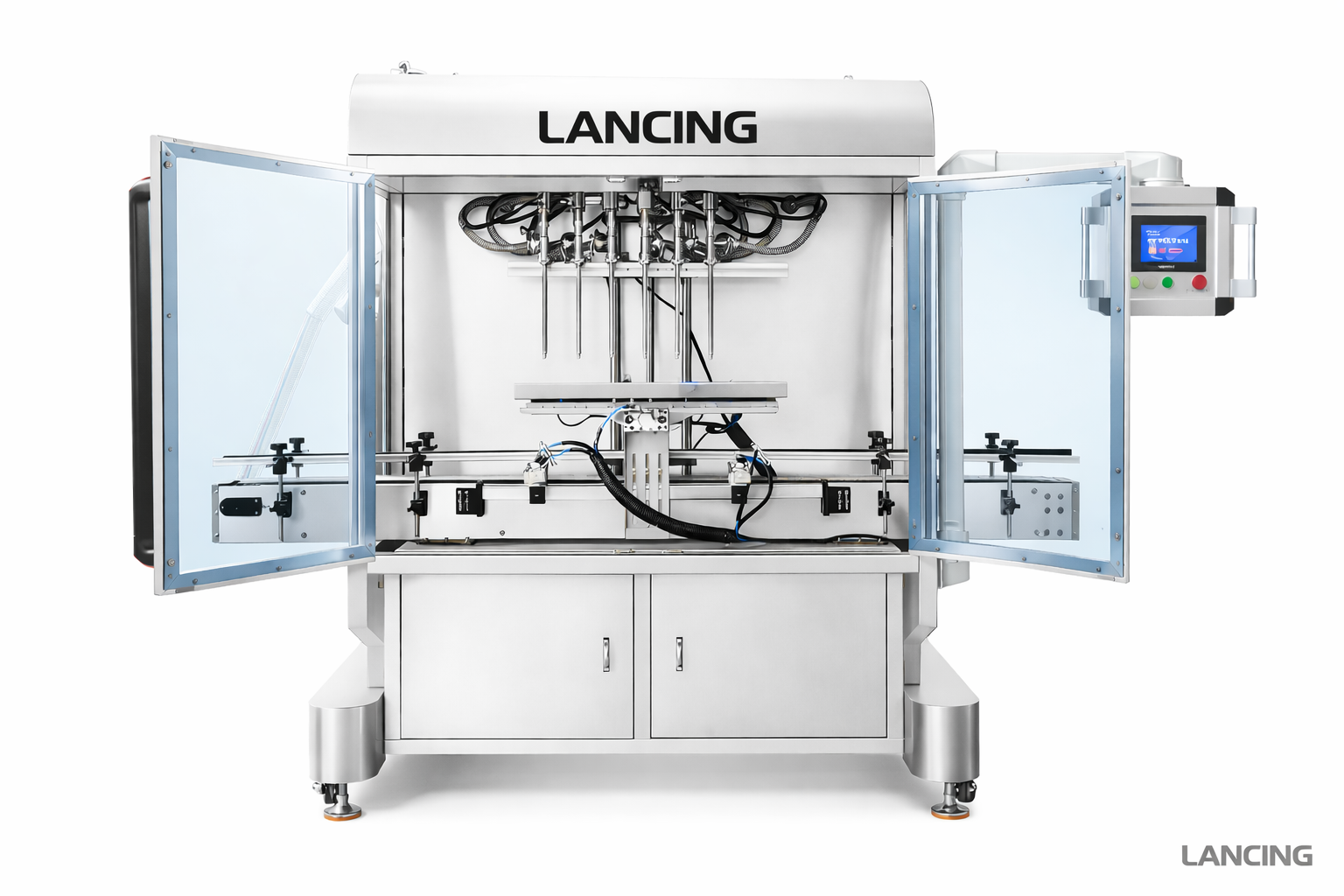
Automatic high-flow liquid filling machine
Application scope

Products and pack formats to define

Chemical and household-product projects require early decisions on material compatibility, containment, ventilation, electrical classification and safe cleaning before machinery is selected. The complete approved range should be recorded before final equipment sizing and tooling decisions.

Product and pack

Detergents, cleaners and household liquids

Confirm representative samples, operating conditions and the required production range.

Product and pack

Oils, lubricants and automotive products

Confirm representative samples, operating conditions and the required production range.

Product and pack

Adhesives, coatings and viscous chemicals

Confirm representative samples, operating conditions and the required production range.

Product and pack

Bottles, jerrycans, drums and trigger packs

Confirm representative samples, operating conditions and the required production range.

Typical process route

Build the line around product behaviour

The most reliable route considers product supply, container control, dosing, closing and presentation as one sequence.

  1. Confirm product hazards and compatible materialsDefine equipment, transfers, controls and the evidence needed to accept this stage.
  2. Control filling, fumes, drips and container stabilityDefine equipment, transfers, controls and the evidence needed to accept this stage.
  3. Apply caps, triggers, plugs or tamper-evident componentsDefine equipment, transfers, controls and the evidence needed to accept this stage.
  4. Label, code, inspect and contain finished packsDefine equipment, transfers, controls and the evidence needed to accept this stage.
Packaging line used to illustrate chemical & household product packaging lines
Risk-led specification

Issues to resolve before machine selection

Each risk should be converted into a design requirement, a trial, an operating control or an explicitly accepted limitation. Product and component samples should represent the difficult extremes rather than only a nominal production format.

  • 1
    Corrosion, swelling or seal incompatibility

    Assess the likelihood, production effect and design or operating control before the line is ordered.

  • 2
    Flammable atmospheres or extraction requirements

    Assess the likelihood, production effect and design or operating control before the line is ordered.

  • 3
    Foam, fumes, stringing and difficult clean-down

    Assess the likelihood, production effect and design or operating control before the line is ordered.

  • 4
    Heavy packs and spill consequences

    Assess the likelihood, production effect and design or operating control before the line is ordered.

Application brief checklist

Send the following information with the initial enquiry. Early clarity usually shortens the route to a credible line concept and makes quotations easier to compare.

  • Safety data sheets and product samples
  • Viscosity, density and temperature range
  • Required wetted-part and seal materials
  • Hazardous-area assessment where relevant
  • Container and closure drawings or samples
  • Spill, extraction and waste-handling plan

Testing and production handover

Agree the factory and site test materials, run duration, quality checks, required good output and treatment of interruptions. Training should cover safe startup, shutdown, replenishment, changeover, cleaning, first-off approval and basic fault response.

Clear project answers

Chemical & Household Product Packaging Lines FAQs

Can a standard liquid line fill chemicals?

Only after compatibility, safety, electrical, ventilation and containment requirements have been reviewed for the specific product.

What is needed for flammable products?

A competent hazardous-area assessment should define zoning and equipment requirements before the line is specified.

How are heavy containers handled?

Conveyor construction, transfers, guide rails, accumulation pressure and operator lifting tasks should be designed around the full pack weight.

Carry the product assessment through every machine stage

A chemical or household-product brief should identify the product information used to select contact materials, seals and handling arrangements. Keep the relevant supplier references and safety information with the line format record. Where specialist assessment is needed, state who provides it and which decisions depend on it.

Follow the filled pack through capping, labelling and discharge. Ask how the intended process addresses drips, spills or an interrupted fill and how affected packs are identified. These questions belong to the whole line boundary rather than only the filling machine specification.

Component changes
Flag a new formulation, closure liner, bottle material or cleaning agent before reusing an approved configuration.
Operating evidence
Include normal refill and changeover conditions in the review. Record whether a trial used the actual product or a substitute and what that limits.

Does a chemical application automatically mean ATEX equipment is required?

The requirement depends on the actual product, environment and competent assessment. Provide the relevant site and material information rather than inferring the answer from the word chemical.

Your packaging line starts with the right brief

Tell us what you need to pack

Share your product, container or pack, closure, label, target output and available space. We will help you define a practical line route and the next information needed.